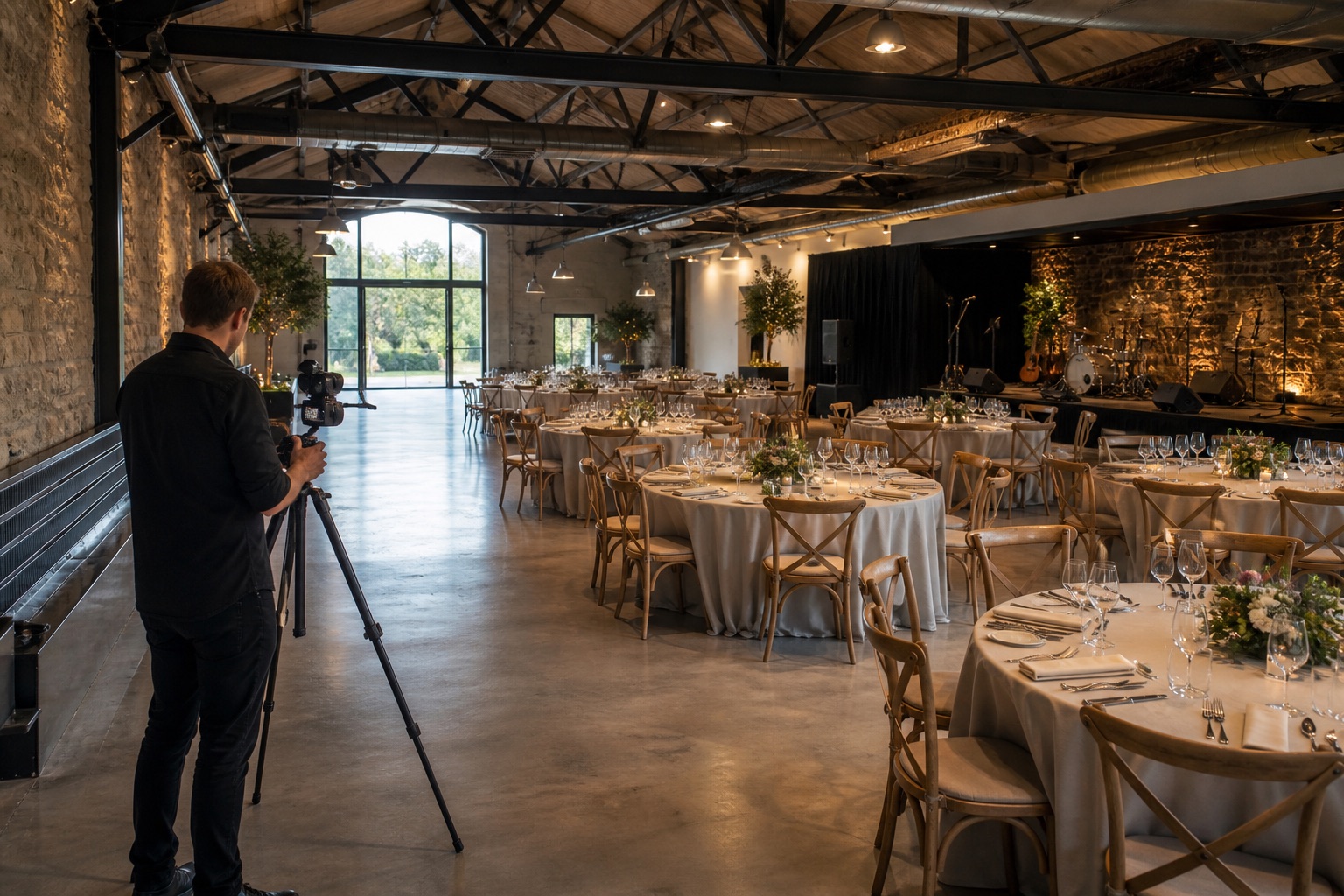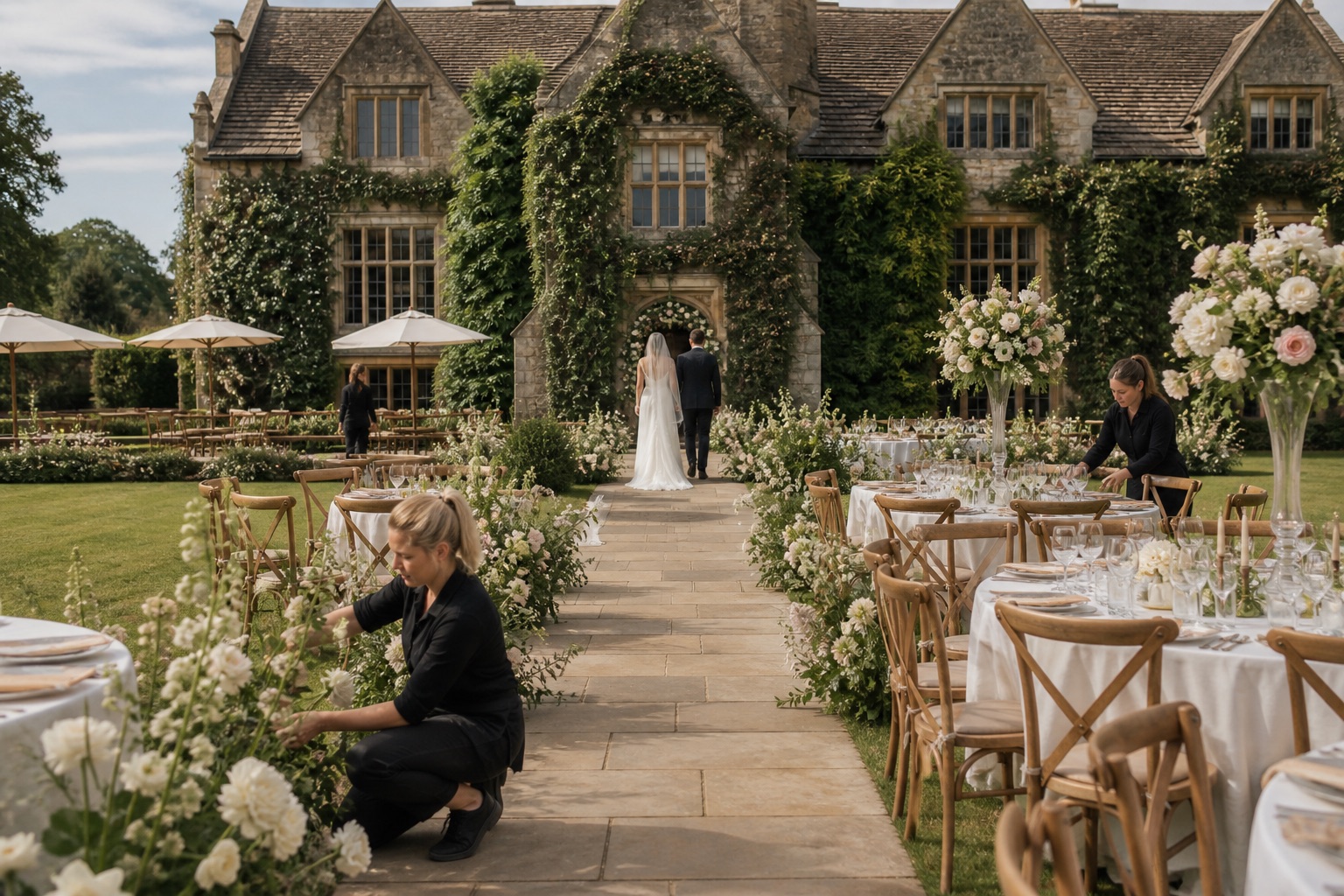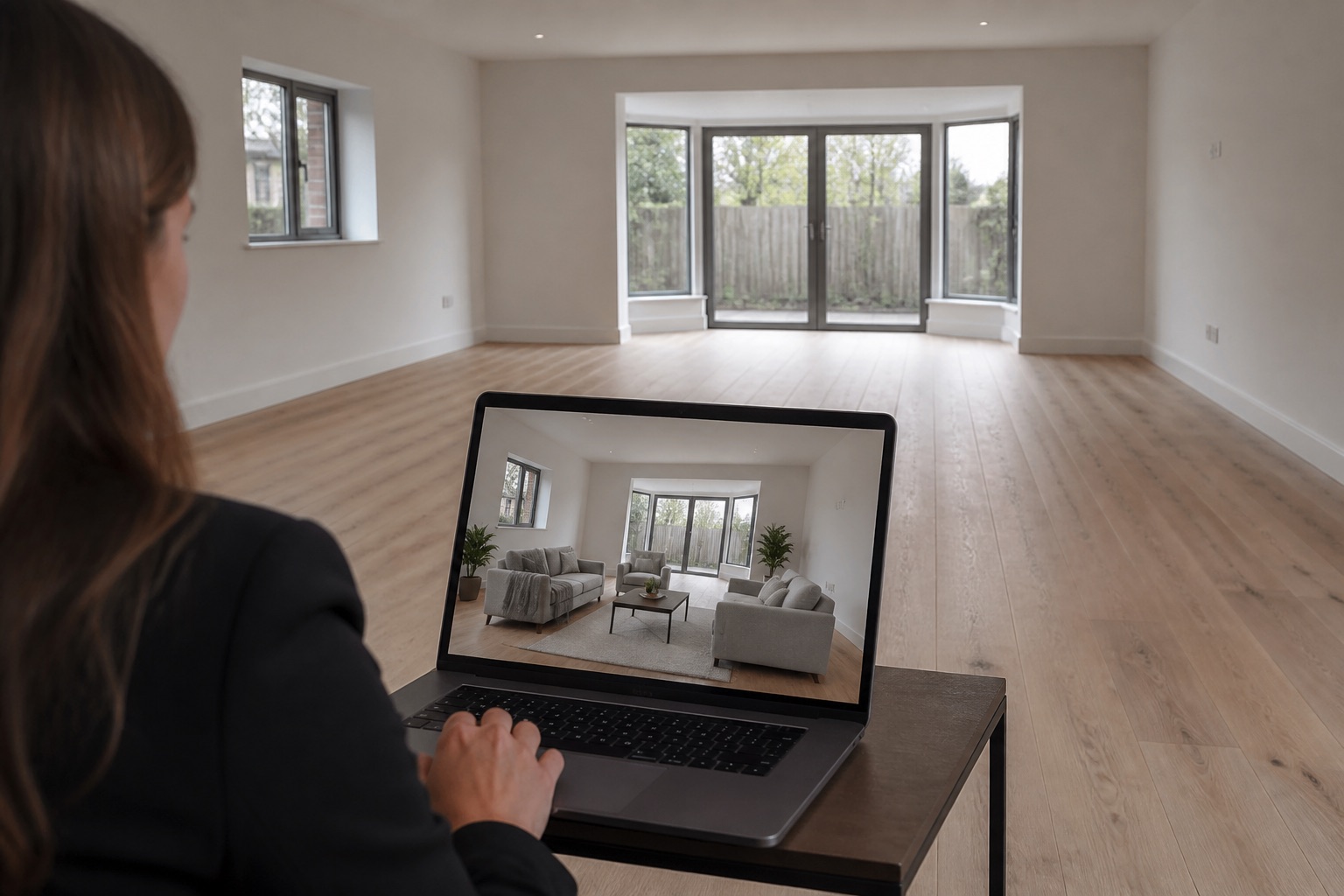
An empty event space is a useful photograph, but it asks the client to do a lot of imaginative work. The solution is not to hide the empty room. It is to give the client a sequence from factual space to credible possibility.
You can build that sequence with previous events, small controlled setups, floor plans, supplier collaborations, and clearly labelled visual concepts created from a real source photograph.
The short version
- Keep the empty-space photograph as the factual anchor.
- Create examples around real layouts and capacities.
- Label illustrative and AI-created scenes clearly.
- Use each concept to answer a defined sales question.
The process
- 01Capture a clean source image.
- 02Choose the event types you want to attract.
- 03Define realistic layouts and capacities.
- 04Create one concept for each use.
- 05Label what is included and illustrative.
- 06Publish the source and concept together.
- 07Link each scene to a relevant enquiry path.
01
Start with a source photograph clients can trust
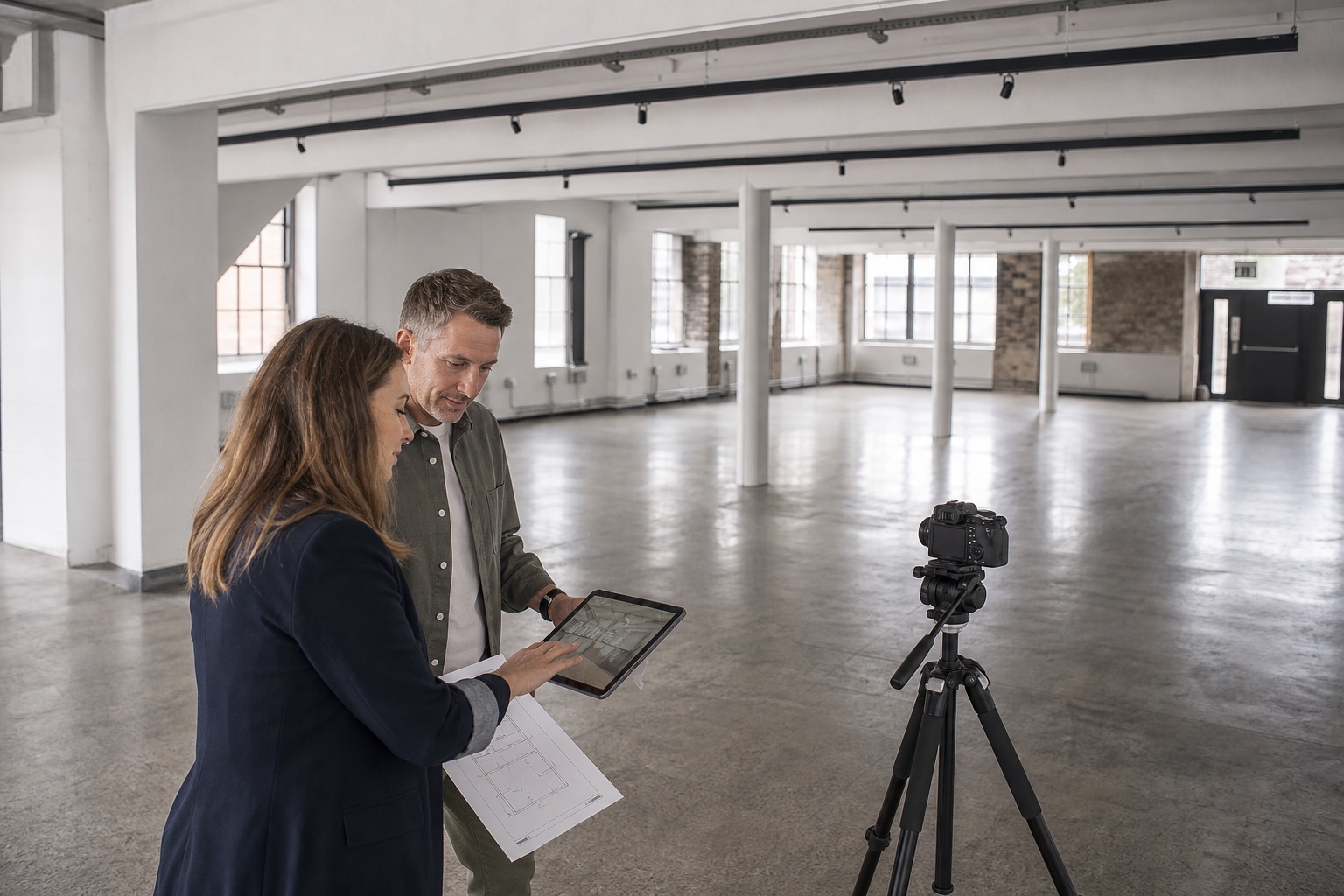
Photograph the room level, evenly lit, and free from temporary clutter. Keep entrances, windows, columns, ceiling features, and permanent finishes visible. This becomes the reliable base for floor plans, proposals, and later concepts.
Do not discard this image once you have more exciting work. Showing the room before and after setup helps clients understand both the venue and its flexibility.
02
Choose concepts from real sales priorities
List the event types the venue can deliver profitably and wants more of. A wedding breakfast, awards dinner, product launch, conference, private party, and exhibition each need a different layout and atmosphere.
Create a short brief for each: guest count, furniture plan, focal point, lighting, service, and circulation. A vague “busy event” image is less persuasive than a scene grounded in a genuine use.
03
Use visualisation without changing the property
Add temporary elements such as guests, tables, lighting, flowers, stage, signage, or activity while preserving the room dimensions, doors, windows, structure, and fixed amenities. Keep the scene within safe and operational capacity.
Label the result as an illustrative setup or AI-created visual when it is not a photograph of an event that took place. Make optional production and decor clear. Transparency makes the concept useful rather than risky.
04
Publish the comparison, not only the fantasy
Show the real source image beside the concept. Explain the event type, approximate capacity, and which elements are illustrative. Link to room specifications, floor plans, packages, or a tailored proposal.
The comparison is also strong content for sales decks and social media because the transformation is immediately understandable.
05
Create supporting proof around each concept
A concept can open the conversation, but practical proof closes the gap. Add dimensions, capacities, access information, power, sound limits, catering options, and real photographs of relevant facilities.
Where a supplier can deliver the shown setup, collaborate on a package and credit them. Where the visual is exploratory, say so and invite the client to discuss a bespoke plan.
06
Measure the quality of enquiries
Track which concept pages lead to brochure downloads, calls, site visits, and qualified proposals. Ask enquirers which image helped them understand the space. A concept that attracts the wrong event type may need clearer context rather than more promotion.
Refresh scenes when furniture, room finishes, capacity, or preferred markets change.
Common questions
Questions people ask before they start
Can AI be used to market an event venue?
AI can create illustrative setups from a real venue photograph when fixed property features remain accurate and the result is clearly labelled as a concept rather than a past event.
Should an empty venue photo stay on the website?
Yes. It is the clearest evidence of the underlying room. Pair it with real events, layouts, and labelled concepts so clients can judge both fact and possibility.
What should an event space concept include?
Base it on a real event type, capacity, layout, service style, and production level the venue can support. Explain which elements are optional or illustrative.
About this guide
Written by the Instant Photoshoot Editorial Team
We create practical guidance for the people responsible for property and hospitality images. Our approach separates factual listing photography from the additional lifestyle and campaign scenes a marketing team may want to create.
Read how we create and review guides